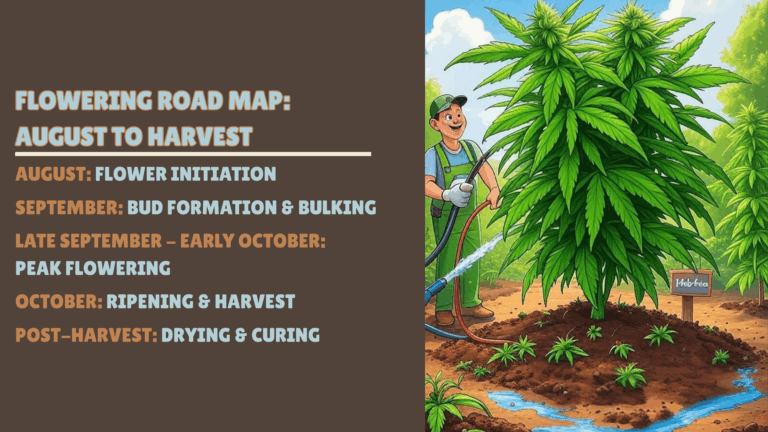
Flowering Road Map: August Through Harvest

Growing outdoors in the GTA means humid late summers, unpredictable fall rains, and the ever-present threat of early frost.

Here’s what to expect and what to do from August through harvest.

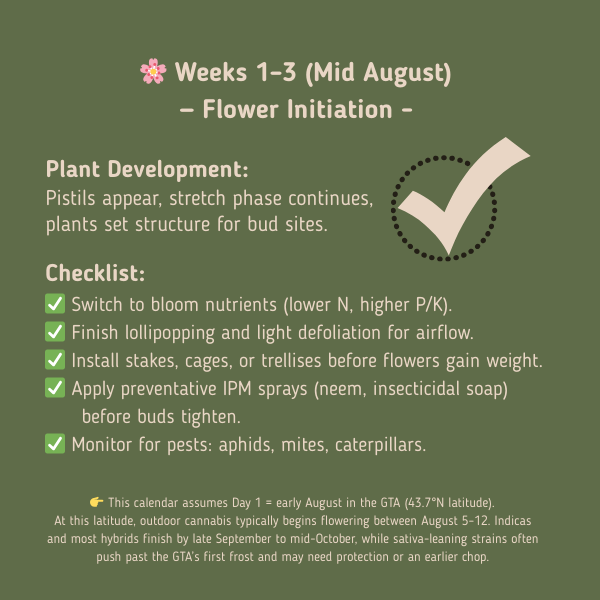
August: Flower Initiation
(Weeks 1–3)

Plant Development

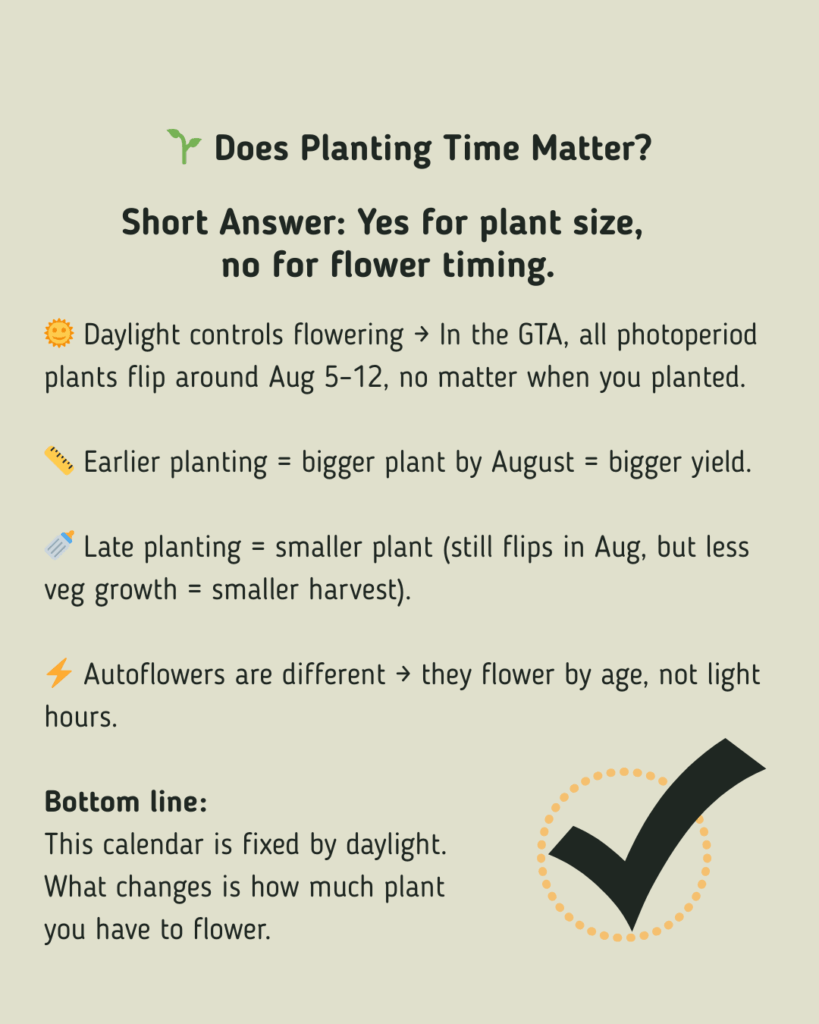
  • Plants detect shorter daylight hours and begin forming pistils at bud sites.

  • Stretch may continue for 1–3 weeks depending on genetics.

Grower Tasks

  • Nutrients: Transition from a vegetative fertilizer (high nitrogen) to a bloom formulation emphasizing phosphorus and potassium.

  • Pruning & Training: Complete lollipopping or light defoliation early in the month to improve airflow and direct energy to bud sites. Avoid heavy pruning once flowers set.

  • Structural Support: Install stakes, cages, or trellises before buds gain weight.

  • Pest & Disease Prevention: Begin weekly inspections. Early sprays with neem oil or insecticidal soap are suitable before dense buds form.

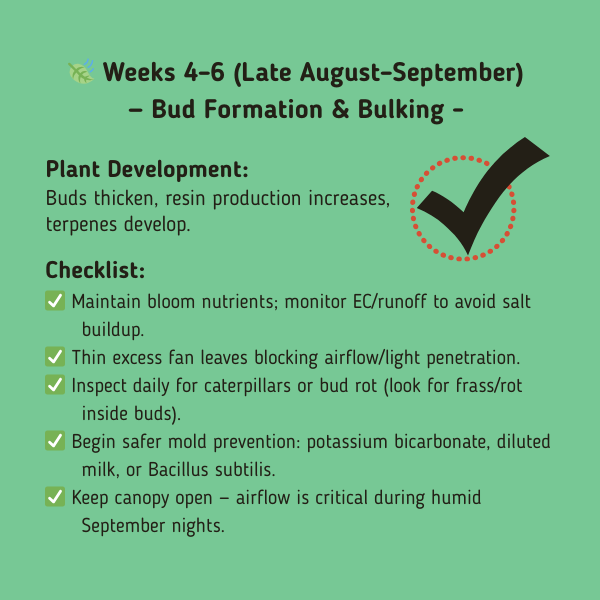
September: Flower Bulking & Risk Management 
(Weeks 4–6)

Plant Development

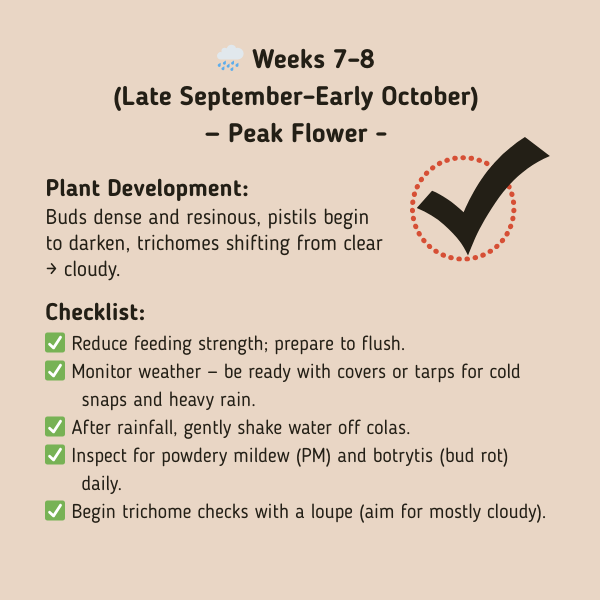
  • Flowers gain density, resin production increases, and terpenes become noticeable.

  • Humidity and rainfall increase the risk of powdery mildew and botrytis (bud rot).

Grower Tasks

  • Airflow: Remove excess interior foliage to maintain an open canopy. Ensure good spacing between plants.

  • Disease Prevention: Use safe products such as potassium bicarbonate, diluted milk solutions, or biological fungicides (e.g., Bacillus subtilis) to prevent mold and mildew.

  • Inspection: Check buds regularly for signs of caterpillars, mold, or insect activity. Remove affected areas immediately.

  • Nutrients: Continue bloom feeding. Monitor runoff EC to avoid salt buildup and nutrient lockout. Adjust feeding strength as needed.

October: Ripening and Harvest
(Weeks 7–10+)

Plant Development

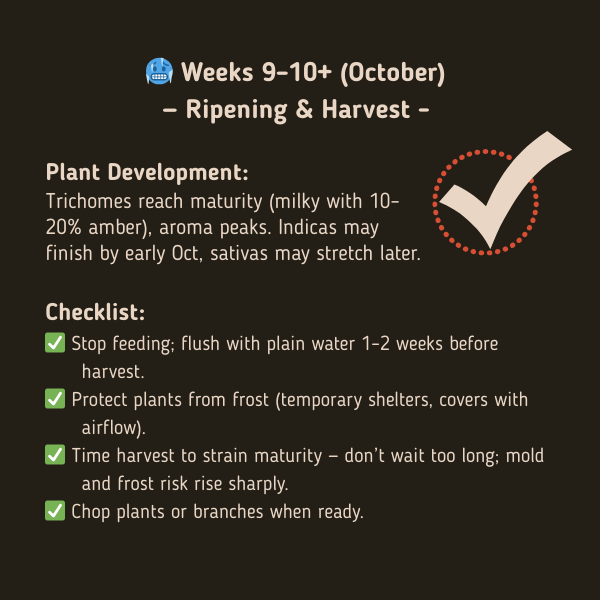
  • Buds harden, pistils darken, and trichomes progress from clear to cloudy and eventually amber.

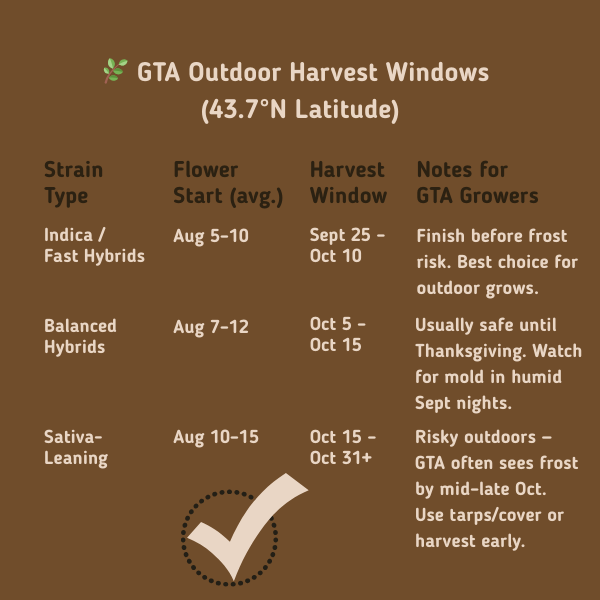
  • Indica varieties often finish in late September to early October, while sativa varieties may require additional weeks and risk exposure to frost.

Grower Tasks

  • Weather Protection: Monitor forecasts closely. Protect plants from heavy rain or frost with temporary covers or
    moveable shelters while maintaining airflow.

  • Moisture Management: After rainfall, gently shake excess water from colas to reduce mold risk.

  • Nutrients: Begin tapering nutrients in the final 1–2 weeks. Many growers flush with plain water to encourage a clean finish.

  • Harvest Timing: Harvest when the majority of trichomes are milky, with 10–20% amber depending on preferred effect.
    Avoid waiting too long, as mold or frost can compromise quality.

Post-Harvest: Drying & Curing

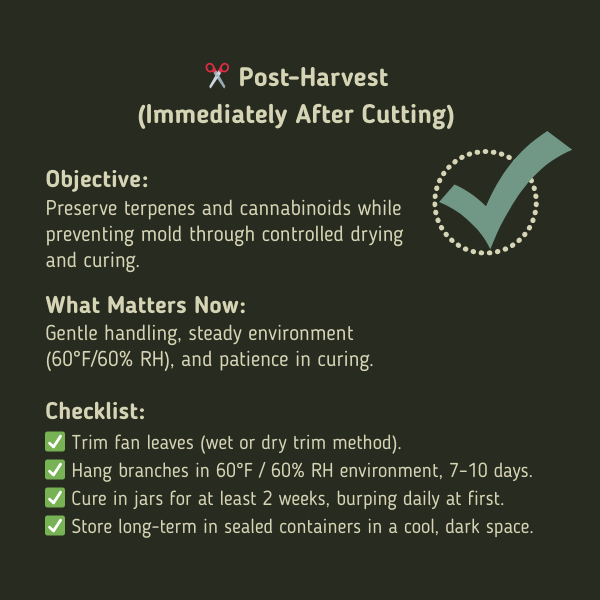
  • Drying: Hang branches in a dark space with temperatures around 60°F (15–16°C) and relative humidity near 60%.
    Dry for 7–10 days until stems snap.

  • Curing: Place dried buds in sealed glass jars. Open (burp) daily for the first two weeks, then weekly thereafter.
    Proper curing enhances aroma, smoothness, and potency.


📍 Key GTA Notes

  • August: Transition to flowering, adjust feeding, and establish plant support.

  • September: Focus on bud bulking, airflow, and disease prevention.

    • Humidity Peaks: September nights often hit 90–100% RH → highest risk for powdery mildew and bud rot.
  • October: Manage weather risks, taper feeding, and determine harvest timing by trichome maturity.

    • First Frost Risk: Around Oct 10–15, but can come earlier in high-humidity, low-lying areas.

  • Post-Harvest: Dry and cure carefully for best quality.

By following these steps, growers can maximize yield and quality while reducing the risks of late-season weather and disease pressures.
top